
Wild Art Rising
Tamara Venn Paints the Cambodian Jungle

Set deep in the Kandal Village arts area is a street so narrow that our car had to come to a complete stop while a motorbike adjusted its parking location closer to a shop entrance. We inched by carefully, watching people come and go from coffee shops, handcraft stores, boutiques, and art galleries. We pulled up near a gorgeous brick patio lush with plants and a pink and blue floral sandwich board announcing the gallery’s name. The glass doors gleamed with the new lettering of Tamara Venn’s six month old art gallery. “Welcome,” it said, “to a world of nature and color.”
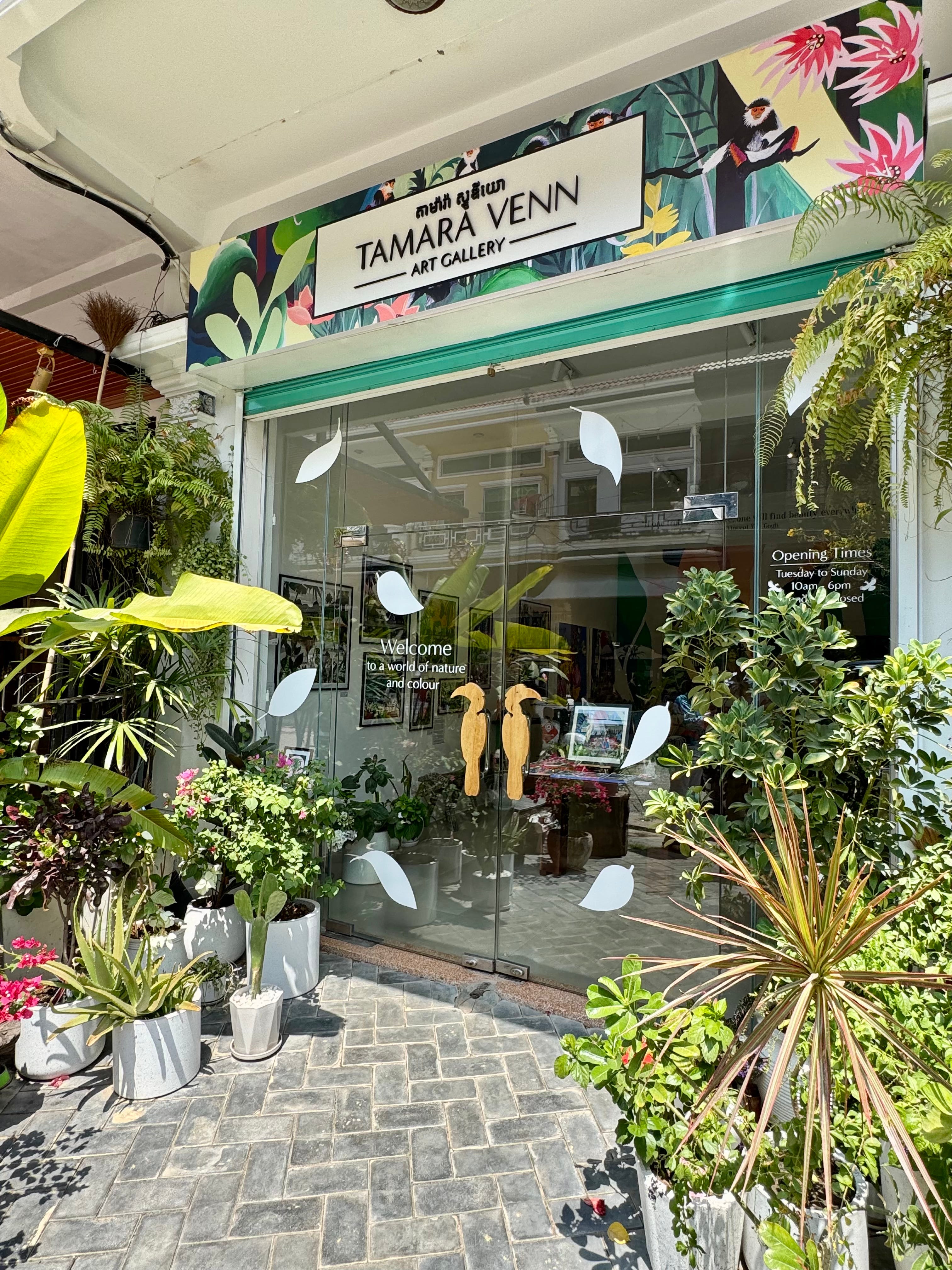
I passed under a sign reminiscent of Lilly Pulitzer’s vibrant 60s florals. For a moment I thought I was in a chic Miami hotel lobby. Bright jewel tones popped everywhere, and as the air conditioning hit, the prints on the wall came to life.
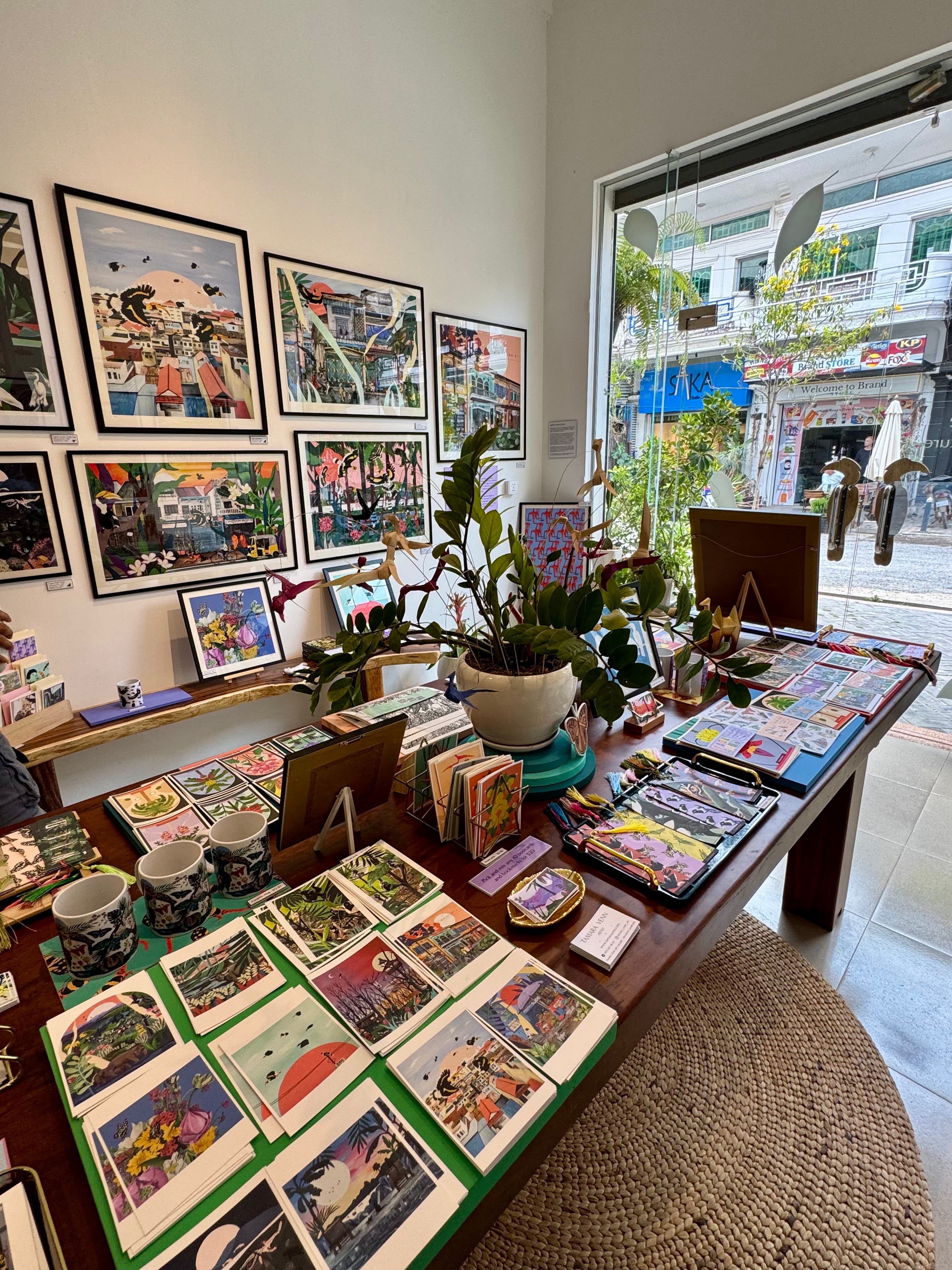
This is artist Tamara Venn’s take on modern Cambodia. Jungles and animals and sunsets weaved together in simple yet sophisticated shapes. A central table offered postcards and bookmarks which brightened an already sun-drenched storefront. A bright blue desk punctuated the back corner. A lounge area invited you to sit under wall poetry and peruse art books. It had an Instagrammable vibe of floral joy.
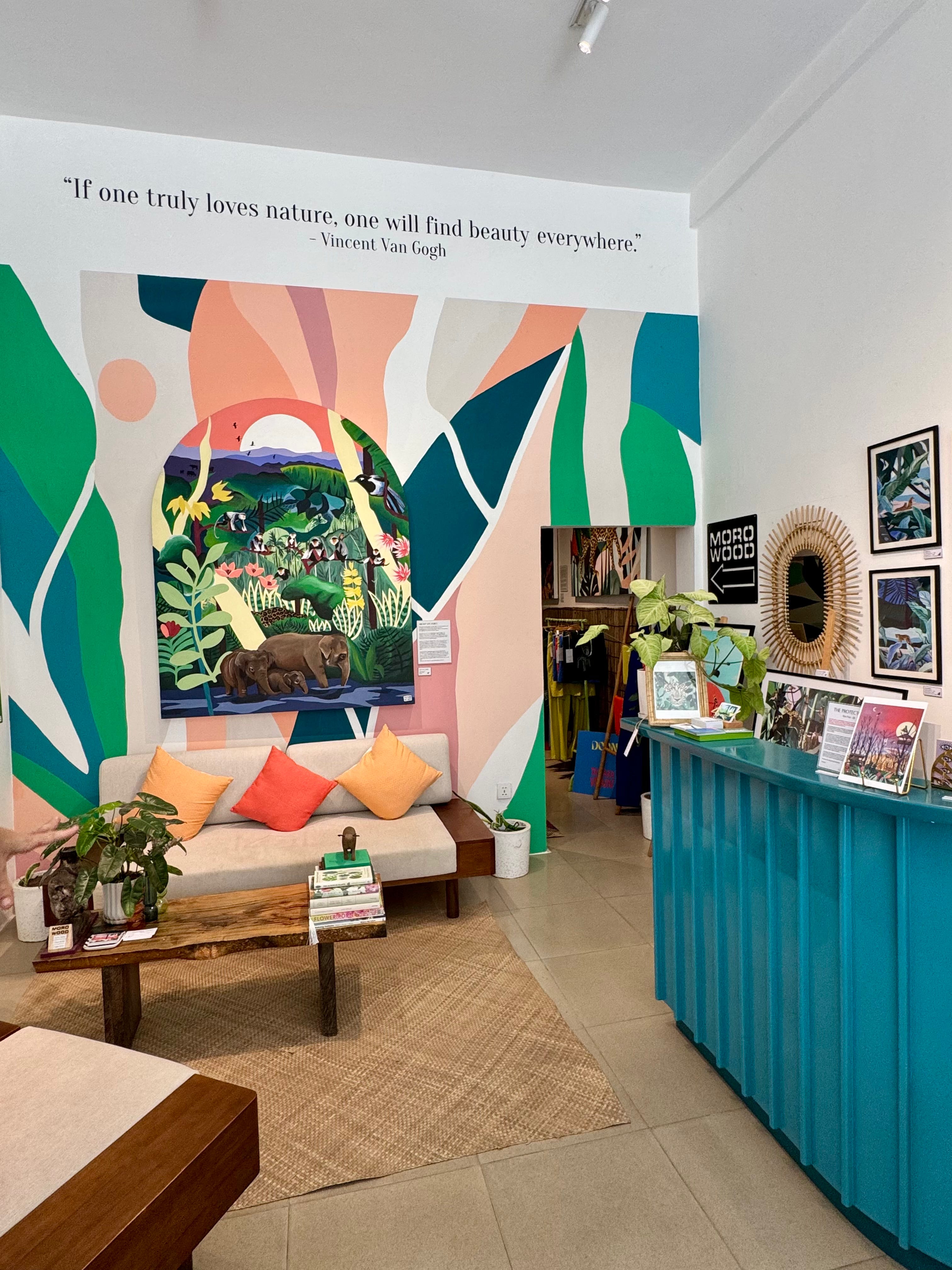
Tamara is a British-Cambodian artist. A graduate of Central St Martin’s College of Art & Design, she now resides in Siem Reap and has become very attached to the natural beauty of Cambodia, including the wildlife, the flora, and the way of life. Her paintings resemble collages in brightly colored shapes. Most pieces are sold, but she sells limited edition prints, as well as some open edition prints.
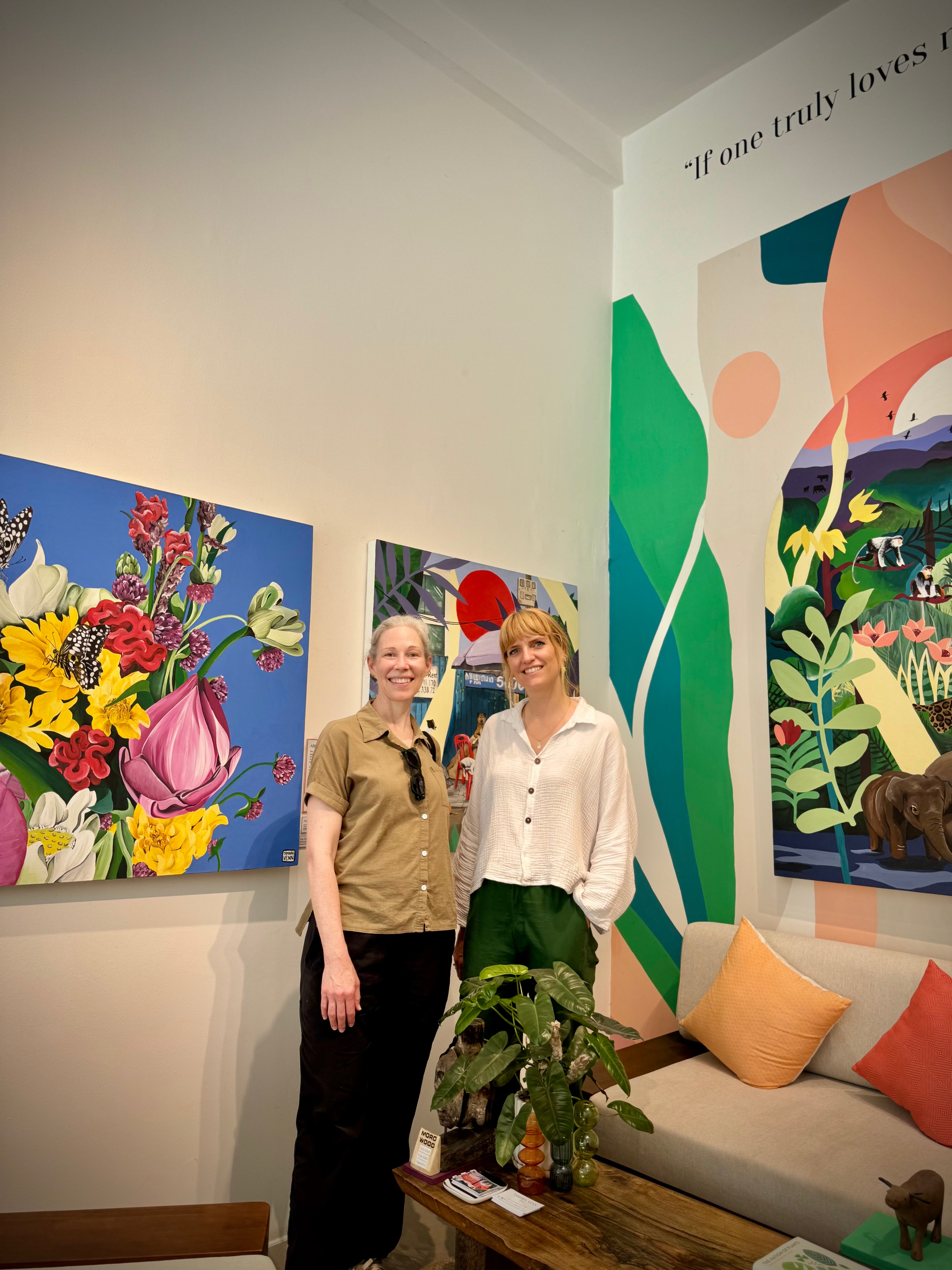
I spent time examining the collections and talking to Tamara. She has a gift of bringing you into her work by pointing out various thoughts about the scenes. She paints botanicals, jungle sunsets, and wildlife animals of Cambodia. There are beetles and butterflies. There is a profusion of flowers. But mostly there are animals: the water buffalo, the birds, elephants, slow lorises, and monkeys.
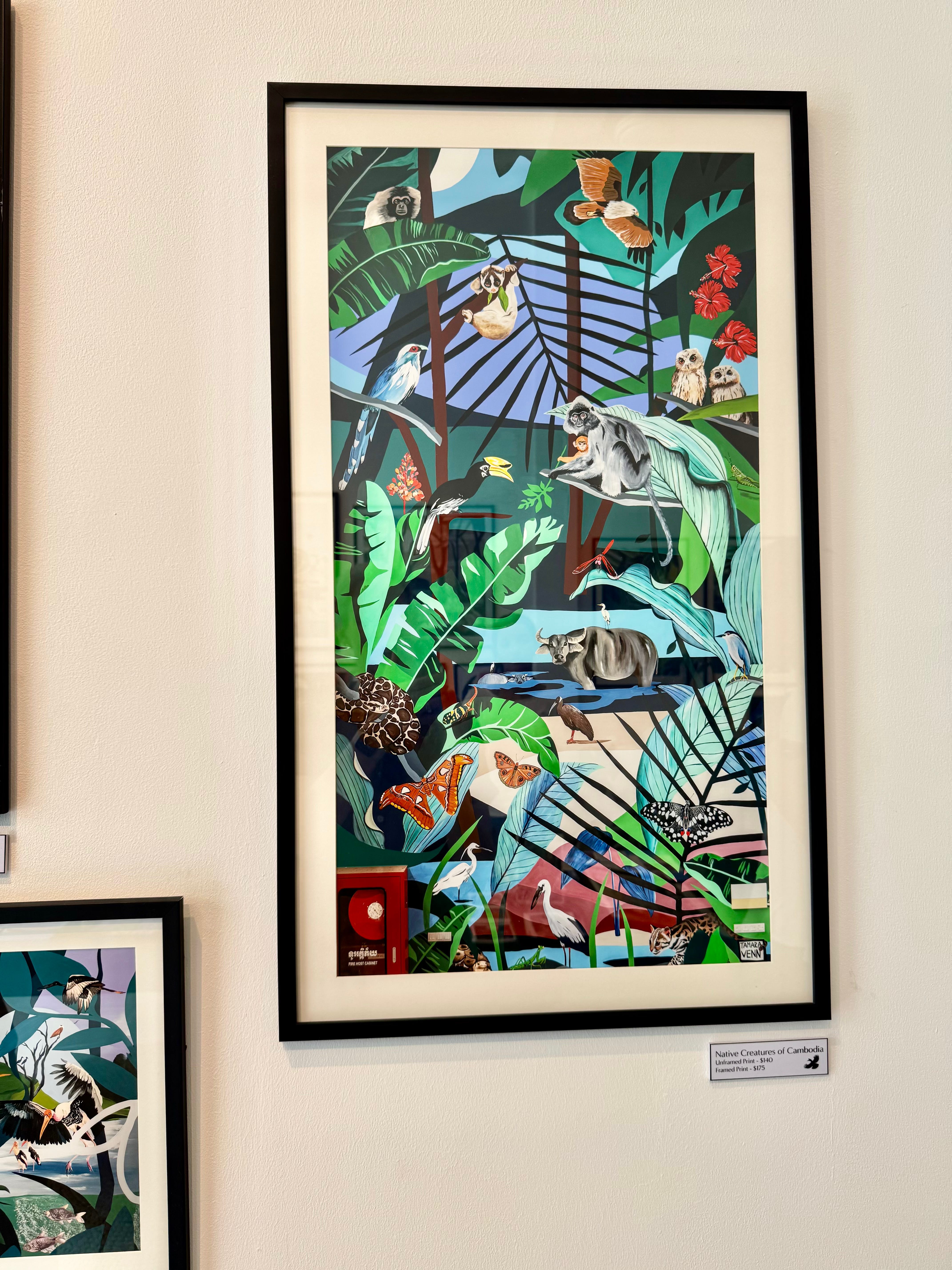
A passionate environmentalist, Tamara donates a portion of proceeds to local wildlife NGOs. She elaborated on a project she supports, painted in The Protectors, that funds security personnel that stand watch 24/7 to protect animals from poaching. She bristles at the fact that I was drinking iced coffee from a plastic cup. I think I won her back when I told her that I don’t eat meat. Which brought us back to the animals.
We pivoted to a print called Water Buffalo. The massive animal stares right at you through the fronds, and you can’t escape his glare. She said it was her first animal painting. Giant white leaves sit at the foreground atop a blue and red underbrush. The bottom color blocking is reminiscent of the Cambodian flag. Green fronds hide jungle secrets in the middle. At the top, a glowing orange sun sets on the landscape. The whole piece is wild and vibrant and simple. Tamara decided that if she could paint the water buffalo, she would give herself permission to paint other animals. She worked for months until she was satisfied with it. It works.
On the second floor of the gallery she hung paintings from a recent exhibition. It’s a series of nine canvases, eight of which worked their way across the room. The ninth was missing–just a nail in the wall indicated its existence. These works focused on plastic chairs. One of which, Peace, was created in only two days when a friend sent her a travel photo and a burst of inspiration hit. A single red plastic chair. A tan sandy beach. The blue ocean rolling in the background. A string of white lights above. That’s it. That plastic chair beckons you for a moment of quiet solitude in an otherwise public place. The chairs bring us together, allowing us to gather or eat or rest. They serve us until they are destroyed. They are unnoticed heroes in this examination. The ninth painting? In its space was a nail in the wall. The painting was sold and had just been picked up. That plastic chair, immortalized in acrylic, went to serve a new owner and bring together a new conversation.
Back downstairs Tamara and I chatted with her new gallery assistant. We took photos in the lounge and exchanged information. I wanted to ask more about her murals, one of which stands 10 meters tall in front of the Canadian International School in Phnom Penh, and serves as part of the educational curriculum for both animals and art. I suspect there’s much more to that project and an opportunity for arts education in other spaces.
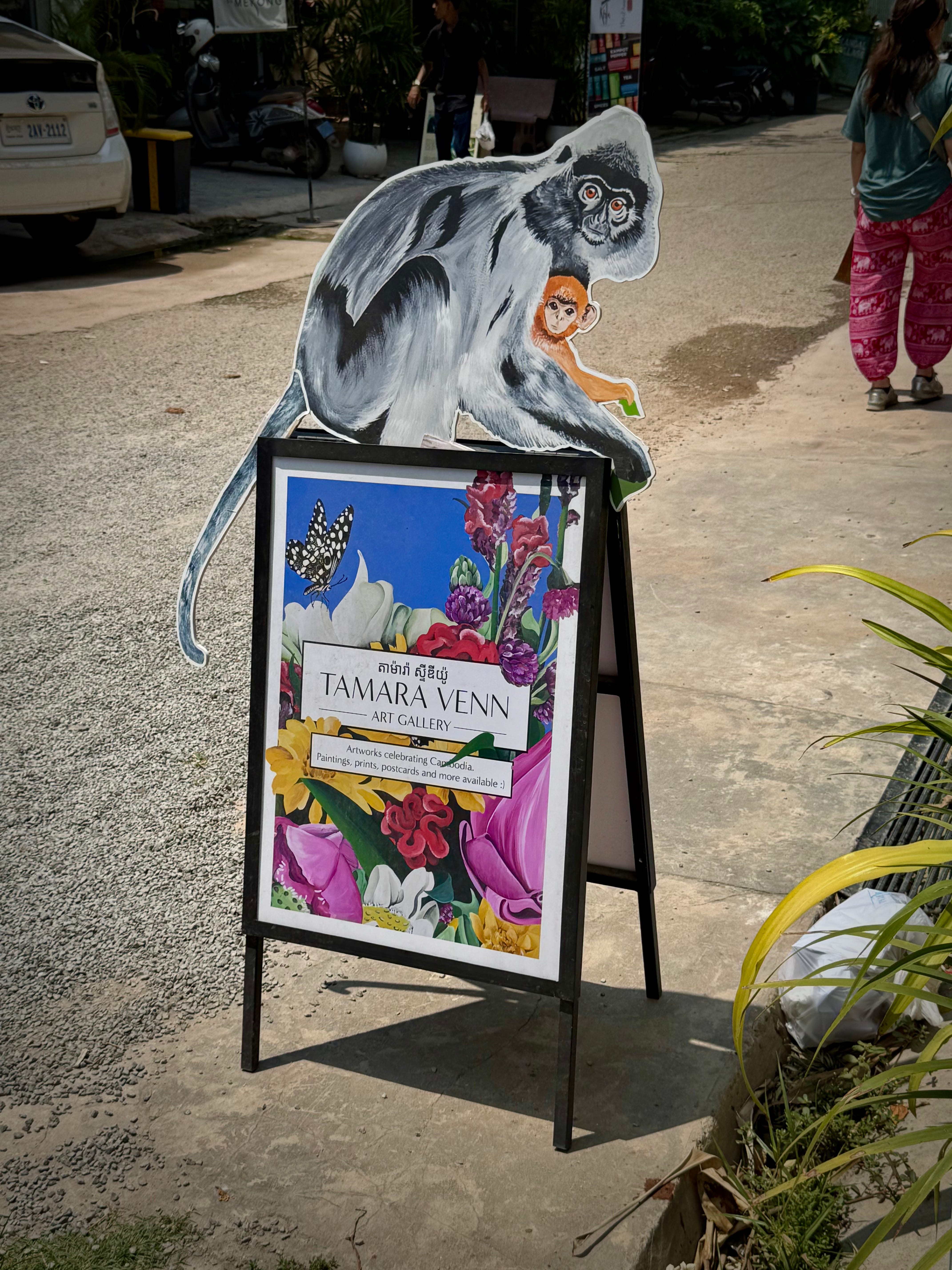
If you can’t visit Tamara Venn Art Gallery in person, then visit her virtually and follow her on Instagram. If your space needs a bit of color, her prints are sure to liven up your room and create an amazing conversation.
Love all the vibrancy found in her work. So alive with color. Thank you for sharing!