
The Charter Documents
The Story of America’s Most Important Cultural Documents

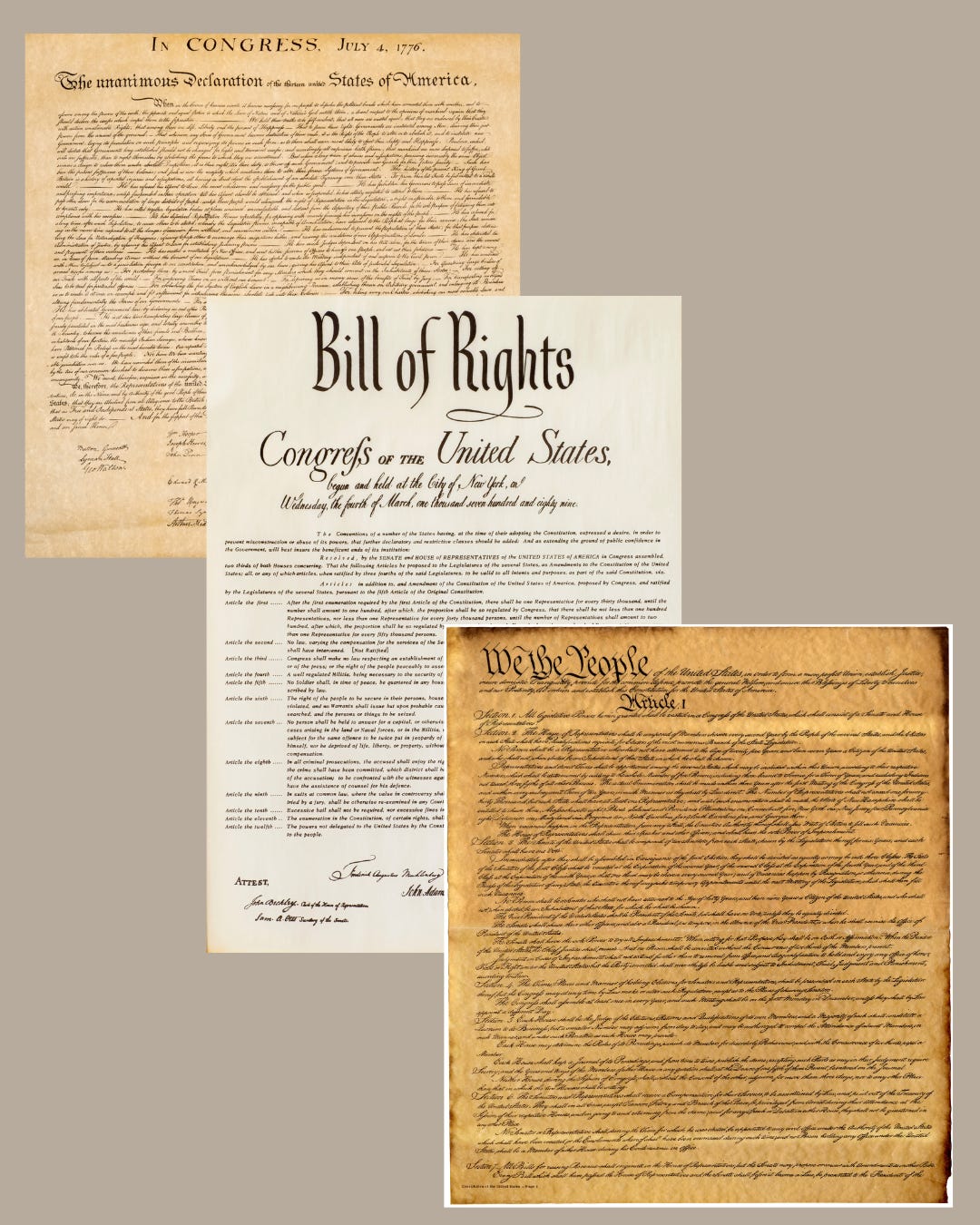
The cultural heritage of the United States originated with three foundational documents, collectively known as the Charters of Freedom: the Declaration of Independence, the Constitution, and the Bill of Rights. Together, they are a manifesto, a framework, and a list of entitlements that the Founding Fathers forged as they set out to create a new republic. Because of their significance in creating a new country two and a half centuries ago, we value them not only for their role in government, but also for their cultural significance.
What does it mean to be culturally important?
Cultural significance is an attribute that describes the importance of an object, practice, or way of life to a particular group of people. In a broader context, culture helps us understand people and history. It defines a society and the values that matter to its people. Culture consciously and unconsciously shapes our values and behaviors. It is, in essence, the flag we fly. We examine culture as a way to understand people based not on their attributes, but on their values.
How are cultural documents protected in the United States?
The preservation of cultural property is its own field. The Charter Documents are housed at the National Archives and Records Administration in Washington, DC, where they are on permanent display in the Rotunda of the National Archives Building.
This YouTube Short is well worth two minutes to see just how much care goes into preserving these documents:
https://youtube.com/shorts/jL9zJ7fjCmA?si=qbAbPmQ0nO_VXRpz
Why does cultural importance matter legally?
The Declaration of Independence is not legally binding. It is a proclamation. Its affirmations became our political principles. It provides legal support, not regulation. It pronounced that the people have the power, so while it set the vision for a different form of governance, it did not create law. The Declaration of Independence is a Dear John letter—it is a public pronouncement that the King of Great Britain had neglected his American colonies, and the American people would no longer stand for that neglect.
The Constitution is legally binding. In fact, it is our foundational set of laws. Congress cannot pass a law that is contrary to the Constitution, and the Supreme Court endeavors to avoid constitutional questions when a case can be decided on other grounds. We don’t mess with the Constitution. It defines the relationship between the federal government and the states, the states and one another, and the roles of the judiciary, the executive branch, and Congress.
The Bill of Rights consists of the first ten amendments to the Constitution. The Constitution needed to be ratified in order to establish the independent government of the United States. It met with resistance from groups and influential individuals because it did not codify enough rights, was vague and idealistic, and contained significant deficiencies. After much debate, twelve amendments were proposed, and ten were adopted. The Bill of Rights was ratified in 1791 and became part of the U.S. Constitution. This makes it law, although interpreting the Constitution is a far more complicated undertaking.
The Charters of Freedom are an early expression of American culture. They serve as the anchor of our government and our system of governance. They represent the will of the people and the philosophy of a fledgling democracy. As such, remembering the spirit in which they were created is important to American history and culture. The Charters of Freedom are an ideal, and while Americans continue to struggle to honor them as society changes, the cultural value of these documents is immeasurable.
Tangible cultural heritage, such as these three documents, requires protection and preservation so that we can understand a pivotal turning point in American history.
Perfect timing. I loved the Utube video and enjoyed the explanation from a lawyer’s point of view…I know you aren’t a lawyer yet, but you are getting there.